

The infrastructure that builds trust before you say a word
What your payment page says before you say anything

There’s a category of trust signal that has nothing to do with what you know, what you’ve done, or what others say about you.
It’s operational trust. And it’s built through things most practitioners treat as administrative.
The payment link is a good example.
Your credentials say you’re serious. You have case studies that demonstrate your approach is effective. You have testimonials that say others trust you.
But the moment someone clicks to pay and lands on a clean Stripe page — that’s a different kind of confirmation. It says: this person has structured their business to receive money. There’s a paper trail. Dispute mechanisms exist independent of their word.
It’s not exciting infrastructure. That’s the point.
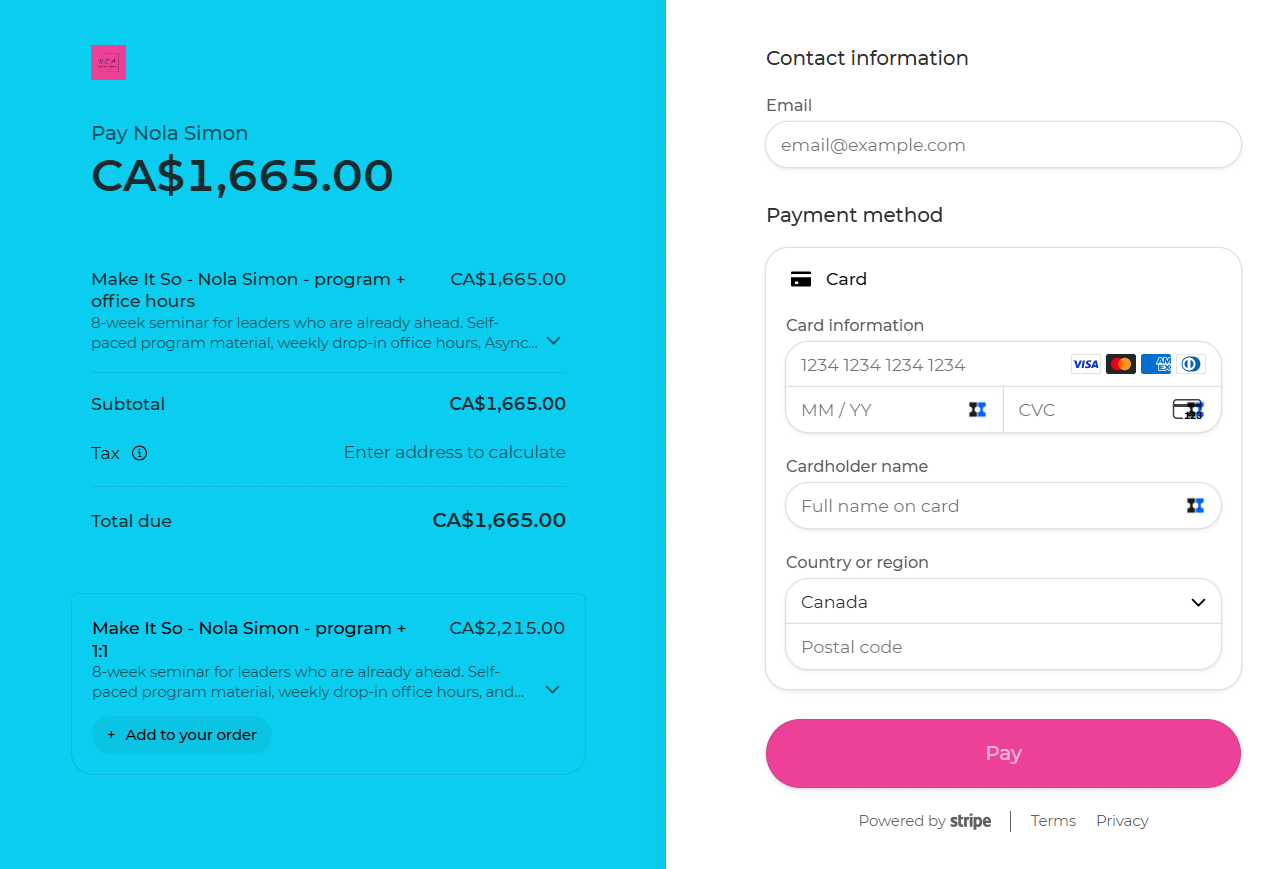
In Canada-US work specifically, there’s an extra layer. A USD-only link puts a decision tax on Canadian buyers. A CAD-only link stops American ones cold. Multi-currency checkout removes the buyer from a calculation they shouldn’t have to do.
The irony is that none of this is about the product. It’s about whether you look like someone who’s been paid before.
I may have vibe coded my website but I’m not collecting personal or payment information directly on it — even if I think I’ve done my due diligence. I’m trusting Stripe for that. It protects you. It protects me.
The AGA equivalent: before you ask whether someone trusts your methodology, ask whether your operational choices are answering questions the buyer isn’t asking out loud. Your payment link is one of the places those assumptions get confirmed or rattled.
What else in your operations is doing trust work you haven’t named?
Sign up for Make It So closes tomorrow.